


With mounting pressure on emergency services, the need for innovation and adaptability in healthcare is greater than ever. Lord Darzi described the NHS as being in “serious trouble,” citing “too little” community funding, a challenge that forces emergency services to find new ways to optimise their operations and get the most from limited resources.
One area where this challenge is particularly acute is in the prevention and management of falls. Stephen Arundel, Managing Director of Healthcare 21 UK (HC21 UK), a leading European medical device distributor, believes that well-coordinated, lower acuity taskforces equipped with modern technology are key to improving emergency response and outcomes for patients.
Why Falls Demand Attention
Anyone can be at risk of a fall, but data consistently show that adults over the age of 65 are particularly vulnerable. For this group, a fall can have devastating consequences: loss of independence, diminished quality of life, and in some cases, the difficult transition into long-term care. The risks increase significantly the longer a person remains on the floor, leading to higher rates of hospital admission and more complex medical complications, putting further strain on the already stretched healthcare system.
The Power of Community-Based Response
Despite the grim statistics, not all falls result in serious injury, and many can be managed effectively by community-based teams. In the East of England, a pioneering partnership between the Bedfordshire, Cambridgeshire, and Essex Fire and Rescue Services, together with the East of England Ambulance Service Trust (EEAST) has led to the creation of lower acuity falls response teams, known as Community Wellbeing Officers. These teams combine their expertise to deliver tailored care directly to local communities.
“Due to increasing call demand, using traditional ambulance response protocols can mean that a person who has fallen may have a long wait, especially if they haven’t sustained any injuries,” explains Tom Barker, Head of Collaborative Response at EEAST. “So, towards the end of last year, we felt it vital to develop this innovative response team approach, which is working very well, and we hope to continue.”
People and Tools: A Winning Combination
Having the right people in the right place is only half the battle. Responders must also be equipped with the right tools to ensure they can work safely and efficiently, especially in fallen person cases, where the risk of injury is high. Evidence shows that even a delay of one or two hours can result in serious complications and a loss of confidence for the patient.
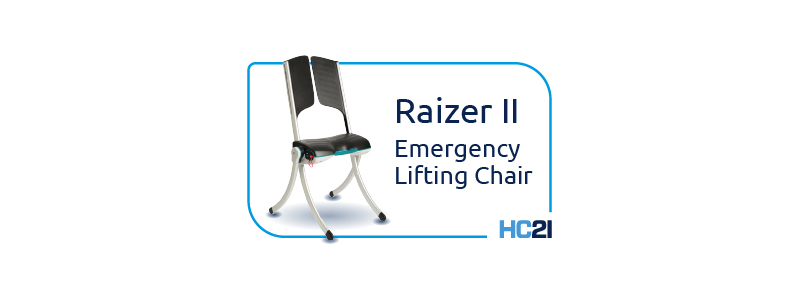
Traditionally, emergency responders relied on manual handling techniques, which often required multiple people and carried risks of injury for both patients and carers. Today, technology is making a difference. Innovative equipment like the Raizer II Lifting Chair, a battery-powered device that a
single responder can operate, allows for a smooth, controlled lift, getting patients back on their feet in as little as 30 seconds and preserving their dignity during the stressful event.
Barker notes that the Raizer II has been particularly well received. “Our collaborative approach and use of tools like the Raizer II mean we can get to a fallen person faster, assess them more quickly and, if possible, discharge them via our clinical advice line. And if they cannot be discharged, they are at least in a more comfortable position before the ambulance arrives. The feedback we’ve had on the Raizer II Lifting Chair has been particularly positive – not just from responders, but patients too, who use words like ‘safe’ and ‘secure’ to describe their experiences. With lifting aids, there isn’t necessarily a one-sizefits all piece of kit, but the Raizer II is certainly proving effective. By having a balance of different lifting aids, it ensures we can be adaptable and match the appropriate aid to the need.”

Looking Ahead
The experience in the East of England demonstrates how a well-coordinated, community-focused approach, supported by collaborative teams and innovative tools such as Razier II, can transform emergency care for falls and similar non-life-threatening incidents. By reducing unnecessary hospital admissions and empowering responders to deliver the right care at the right time, these new models are paving the way for a more integrated and efficient healthcare system.
For professionals across the emergency services, this evolution is a reminder that real progress comes from the blend of expertise, compassion, and the willingness to embrace new solutions, ensuring that when seconds count, every response truly makes a difference.